Refrigerator Repair
Viking Refrigerator Warm While The Freezer Stays Cold
Written by Ambrose Fitzwilliam Service technician — refrigeration and sealed systems · 25 years in the trade
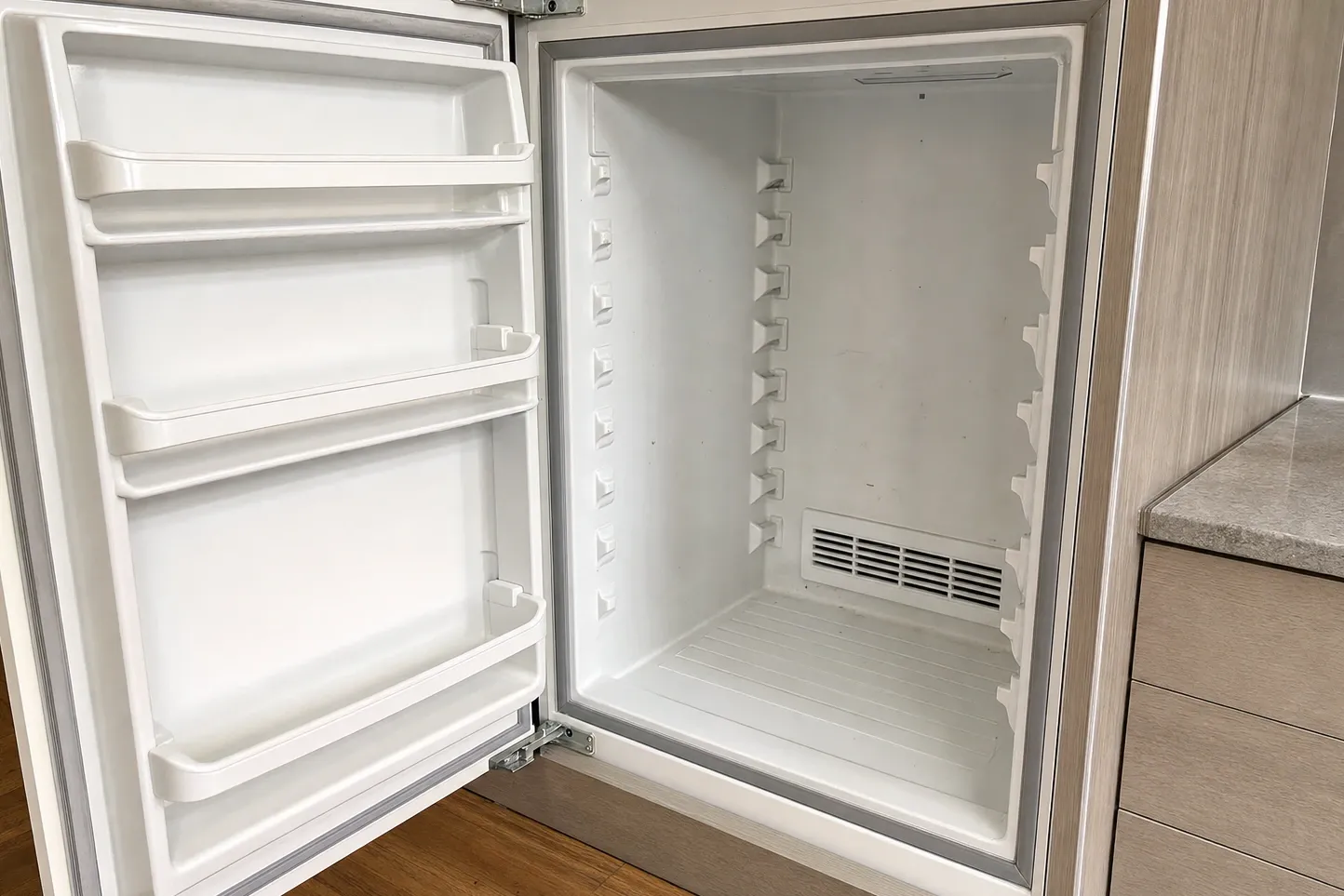
If the freezer on your Viking built-in is rock hard and the fresh food side has drifted into the fifties, the first thing worth knowing is what it is almost certainly not. It is not the compressor. A failed compressor or a refrigerant leak takes both compartments up together, because both are cooled by the same system. One cold compartment and one warm one is proof that cold is still being made and is simply not being delivered.
That narrows the fault enormously, and it narrows it to three parts.
Why one side goes warm and the other does not
On built-in refrigeration of this type there is one evaporator making cold, in or behind the freezer. The fresh food compartment is cooled by having some of that cold air pushed across into it. A fan moves the air, a duct carries it, and a motorised damper meters how much of it goes across. Meanwhile a defrost cycle runs periodically to melt the frost that inevitably builds on the evaporator fins.
So a hard freezer plus a warm fridge means one of:
- the damper is stuck shut, so the cold air has nowhere to go
- the evaporator fan has stopped or slowed, so nothing is pushing the air
- the defrost system has failed and the evaporator has iced over solid, so the fan is running against a block of ice
All three produce the same headline symptom and each one leaves a different signature. You can usually tell which you have from the kitchen, without tools.
Telling the three apart from your kitchen
Listen at the freezer, and let the doors sort the fans out. On most cabinets the door switch cuts the fan inside the cold space, so listen with the doors shut and an ear to the freezer: a steady whir means that fan is alive, while silence, or a ticking and stalling sound, points at the fan motor or something frozen against the blade. A fan grinding and then stopping is very often ice, not the motor. A noise that carries on with a door open is coming from the warm side of the machine instead — which fan you are hearing changes the repair.
Look at the back wall of the freezer. A light, even dusting of frost is normal. What is not normal is a sheet of ice over the vents, frost creeping across the shelves, or a solid white slab where the rear panel is. That is a defrost failure and it is the single most common version of this fault.
Feel the vent inside the fresh food compartment. It is usually high on the back or side wall. With the unit running and the fridge warm, there should be noticeably cold air moving out of it. Nothing at all, while the freezer is hard, is the damper.
Check whether it recovers. Empty the freezer, switch the unit off at the breaker and leave the doors open overnight with towels down. If everything comes back to temperature and stays right for two or three days before drifting warm again, you have proved a defrost fault: melting the ice by hand did the job the defrost cycle should have done.
What a Los Angeles summer changes
Two things are worth knowing if you are in the valley. First, a marginal condenser copes in April and gives up in August. Tarzana and the streets off Ventura Boulevard run long stretches of triple-digit afternoons, and a condenser coil carrying a season of dust, or a fan blade with a hairline crack in it, will hold temperature in mild weather and then fall behind for weeks. If your fridge went warm during a heat wave and has been running continuously without cycling off, have the condenser and its fan looked at before anything inside the cabinet.
Second, heat makes a marginal door seal into an active fault. A gasket that has taken a set sits proud of the frame, and on a hot day the extra load it adds is enough to tip a unit that was just about coping. It shows up as frost round the inside of the door and a compressor that never stops.
Neither of those is the same repair as a damper or a fan, and both are cheaper to put right — which is exactly why it is worth describing the weather and the noise, not just the temperature, when you call.
What to have ready, and when to stop
Before you book, note four things: the actual fresh-food temperature measured in a glass of water, whether the freezer is hard or merely cool, whether there is visible ice at the back of the freezer, and whether the unit ever cycles off. Those four answers between them separate a damper from a fan from a defrost fault from a condenser problem, and they turn a diagnostic visit into a repair visit.
Stop and call at the point where you would have to take the rear panel out of the freezer. Behind it sit the evaporator, the fan and the defrost heater, all in a tight assembly with wiring that is easy to nick, and on a built-in the cabinet usually has to come out of its millwork first without marking anything. That is the part of this job worth paying for.
The $89 buys the visit and the whole diagnosis: the fault proved, the part named, and the figure agreed with you before anything is fitted. On this particular symptom it is very often a great deal smaller than the one people have braced themselves for, because they rang expecting to be told the compressor had gone.
If your cabinet is doing something other than this — frost sheeting the freezer wall, water under the drawers, a unit that never cycles off — every one of those has its own page in the symptom library, sorted by what you can actually see.
Follow-ups
How warm is too warm on the fresh food side?
Anything at or above 40°F needs dealing with the same week, and the fifties means food safety rather than convenience. Measure it properly with a glass of water left in the middle of the compartment overnight rather than trusting the door display, which reads its own sensor and is the thing under suspicion.
Should I empty the freezer and let it defrost overnight?
It is a genuinely useful test. If a full manual defrost brings the fresh food side back to normal for a few days and then it drifts warm again, you have proved a defrost fault rather than a fan or a damper. Tell the technician you did it — that result saves a whole stage of diagnosis.
Is it worth repairing a built-in that is fifteen years old?
For a fan motor, a damper, a defrost heater or a thermistor, yes without much hesitation: those are modest parts in a cabinet that was built to outlast them. The one repair that changes the calculation is a sealed-system failure, which is why it is worth knowing which of the two you are dealing with before you spend anything.